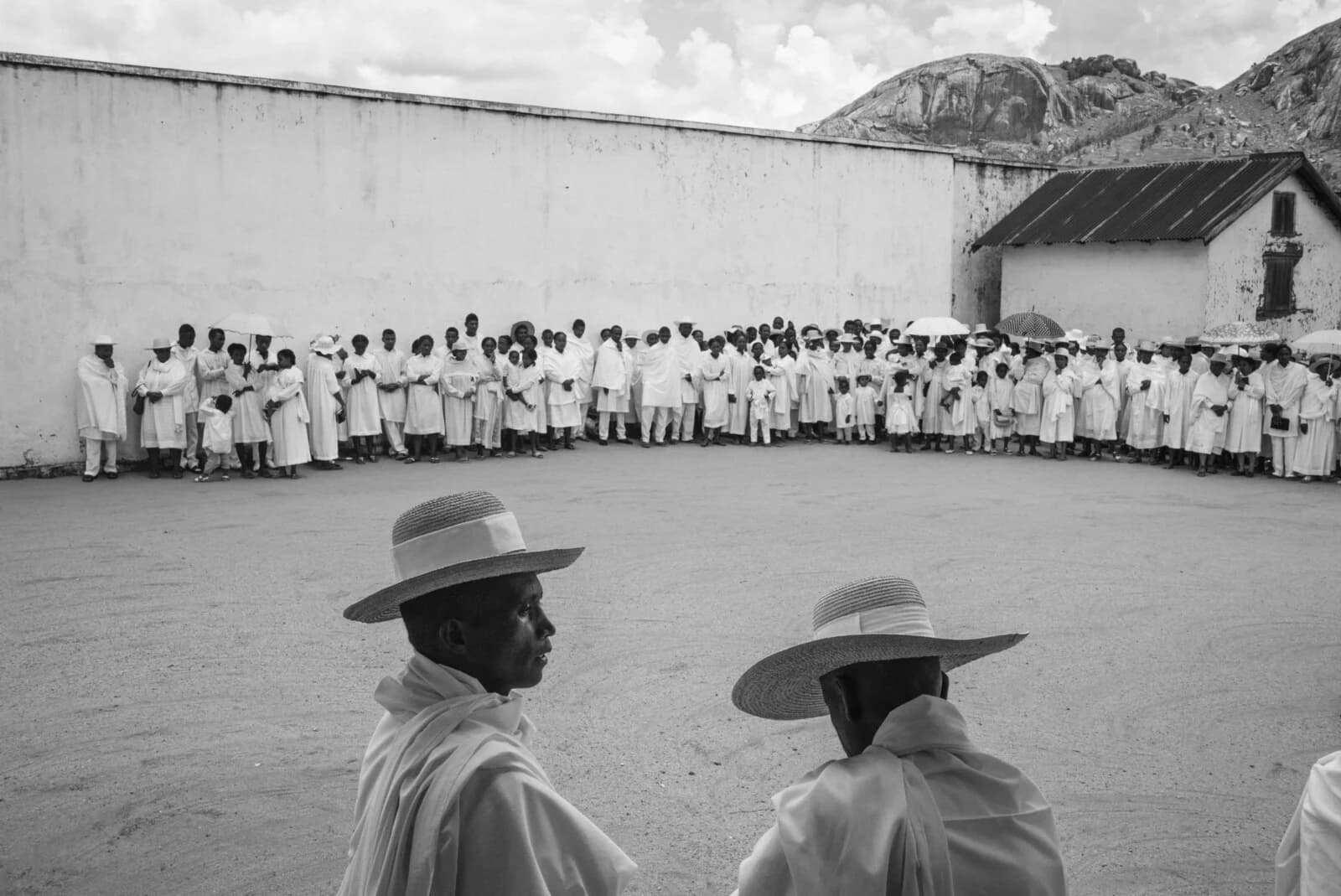
Community
Origin & context
Rainisoalambo (around 1839), a respected Betsileo notable who practiced sorcery and divination, became seriously ill and was abandoned by those around him. In 1893, he turned to the Christian God, renounced idolatry, and was healed. His testimony led twelve other people to embrace the Christian faith.
From this revival emerged a work of evangelization through the sending of Iraka (missionaries), the construction of churches, and the administration of baptism and Holy Communion. This work gradually grew into a fully established Church, officially recognized as independent in 1963.
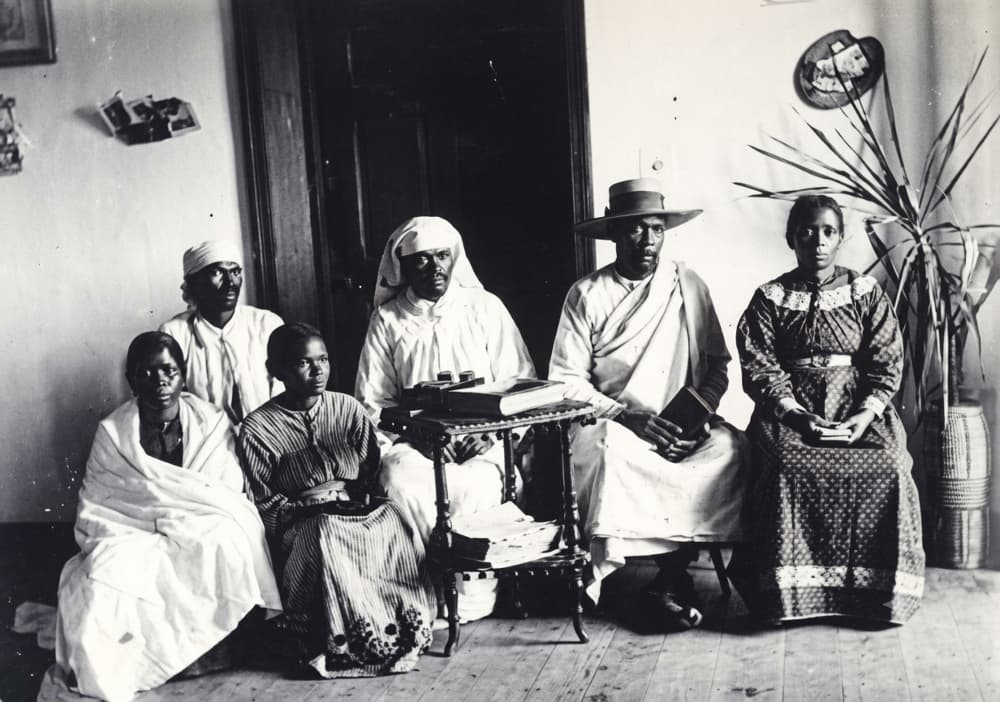
From left to right: Rajeremia and his wife, Rainitiaray and his wife, Rainisoalambo and his wife.
Hallmarks of the community
Living traditions, an active faith and a recognized cultural heritage.
White garments
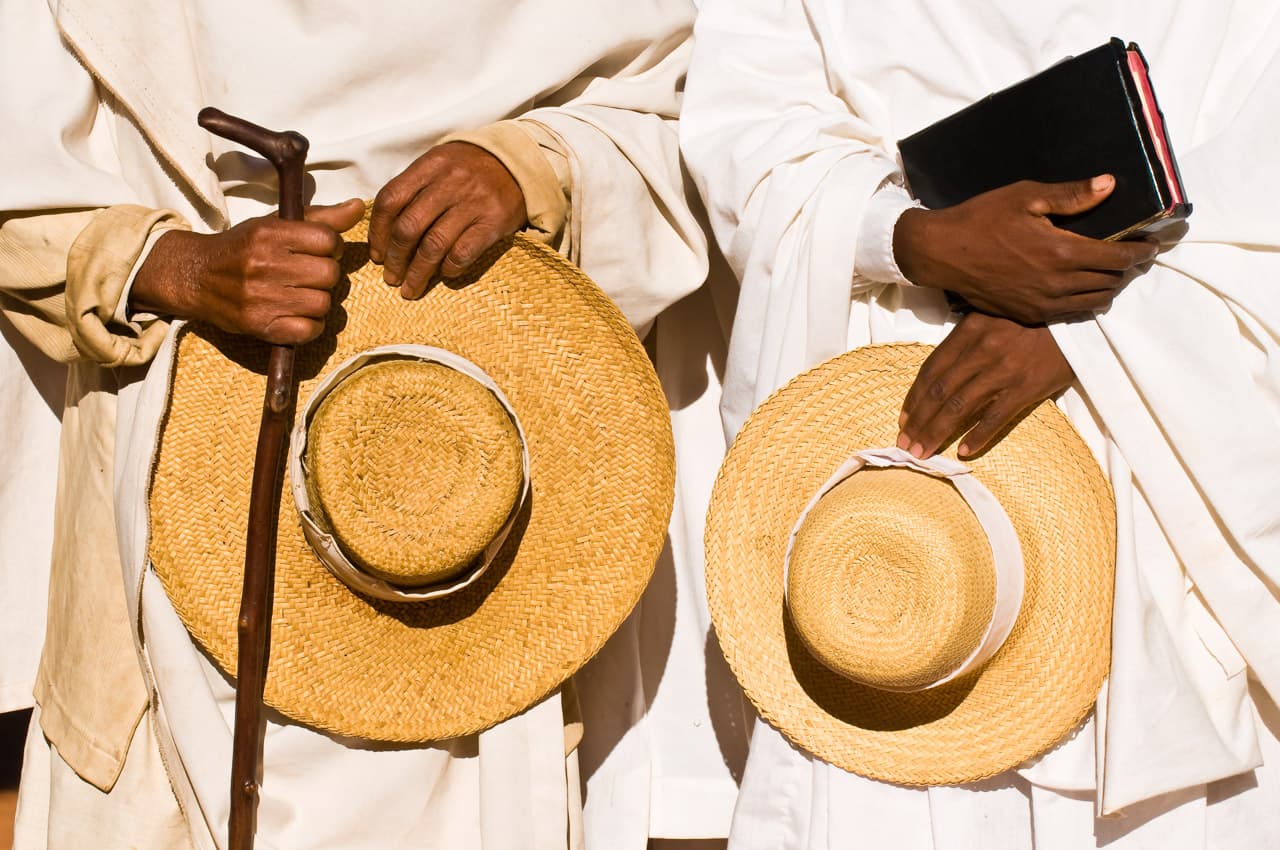
The faithful and the shepherds (mpiandry) are recognized by their entirely white robes, tunics and hats, symbols of spiritual purity.
Spiritual Practices
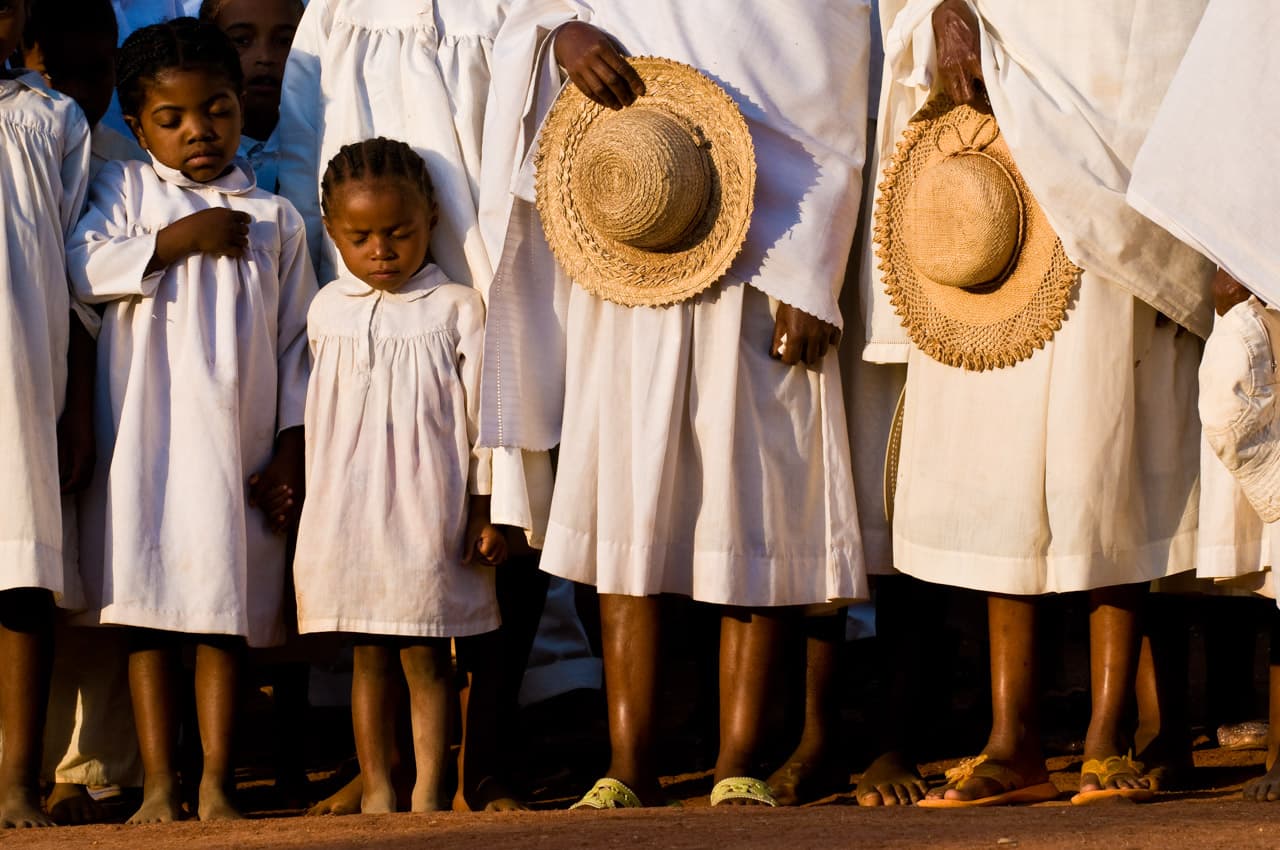
Active preaching, prayer, the laying on of hands for healing the sick, and spiritual deliverance are central to the life of the Church.
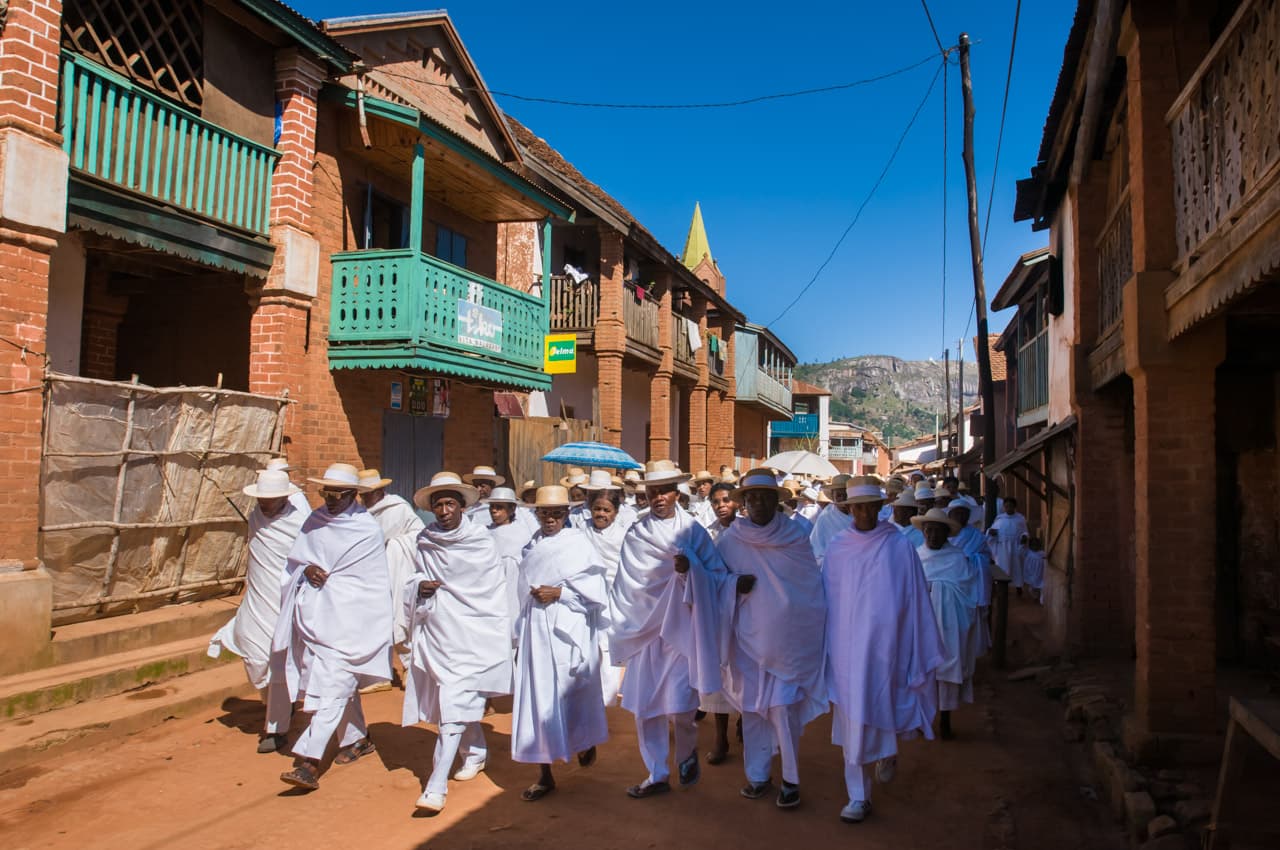
Annual Gatherings
Large annual gatherings bring together thousands of pilgrims from across Madagascar and the diaspora to Soatanàna to celebrate September 17.
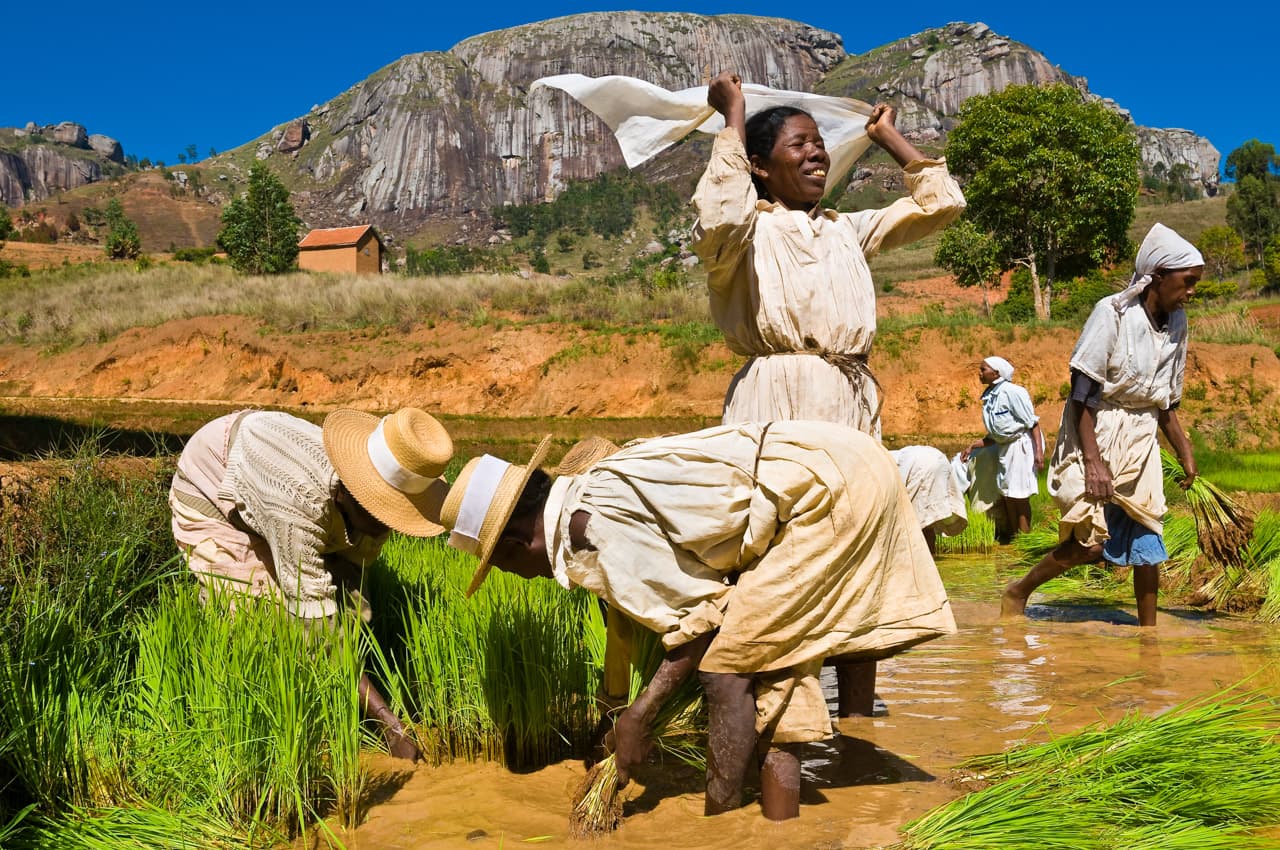
Community Service
Through mutual support and collective work, members contribute to the growth of God's Kingdom.
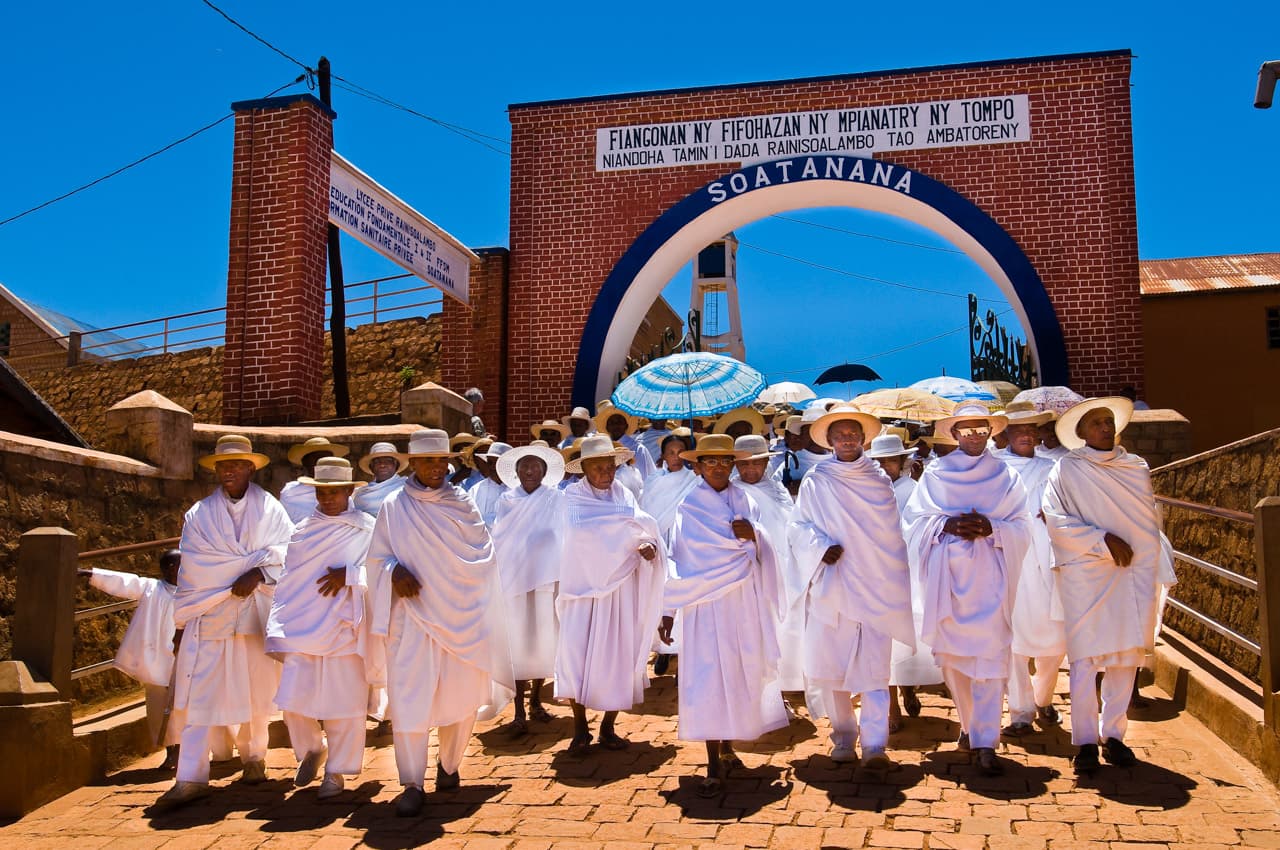
Historic Spiritual Center
Soatanàna is home to the spiritual center of the Revival, a place of pilgrimage and remembrance for the entire Church.
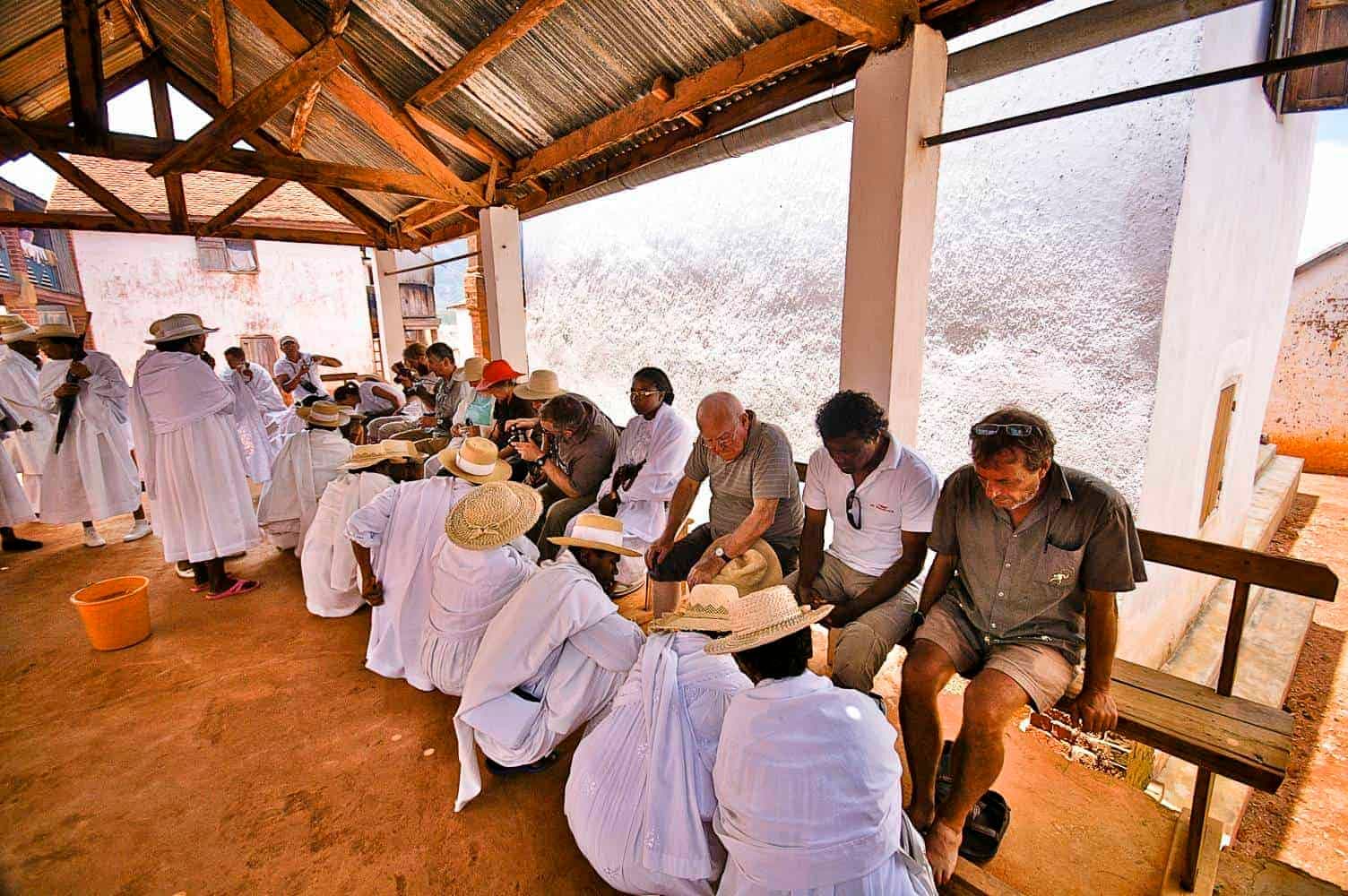
Foot Washing
A sacred act of welcome and fellowship in which believers wash one another's feet as a sign of deep humility.
FFSM Soatanàna
The FFSM is an independent Malagasy Protestant church officially founded on June 7, 1955. It originated from the Christian revival movement (Fifohazana) that emerged in Soatanàna under the leadership of the prophet Rainisoalambo in the late nineteenth century.
The church separated from the branch that became integrated into the Malagasy Lutheran Church following historical disputes regarding legitimacy and spiritual heritage. Nevertheless, it continues to uphold and preserve the original teachings and principles established by its founder.
Its headquarters and historic spiritual centre (toby lehibe) are located in Soatanàna, a rural town in the Haute Matsiatra region.
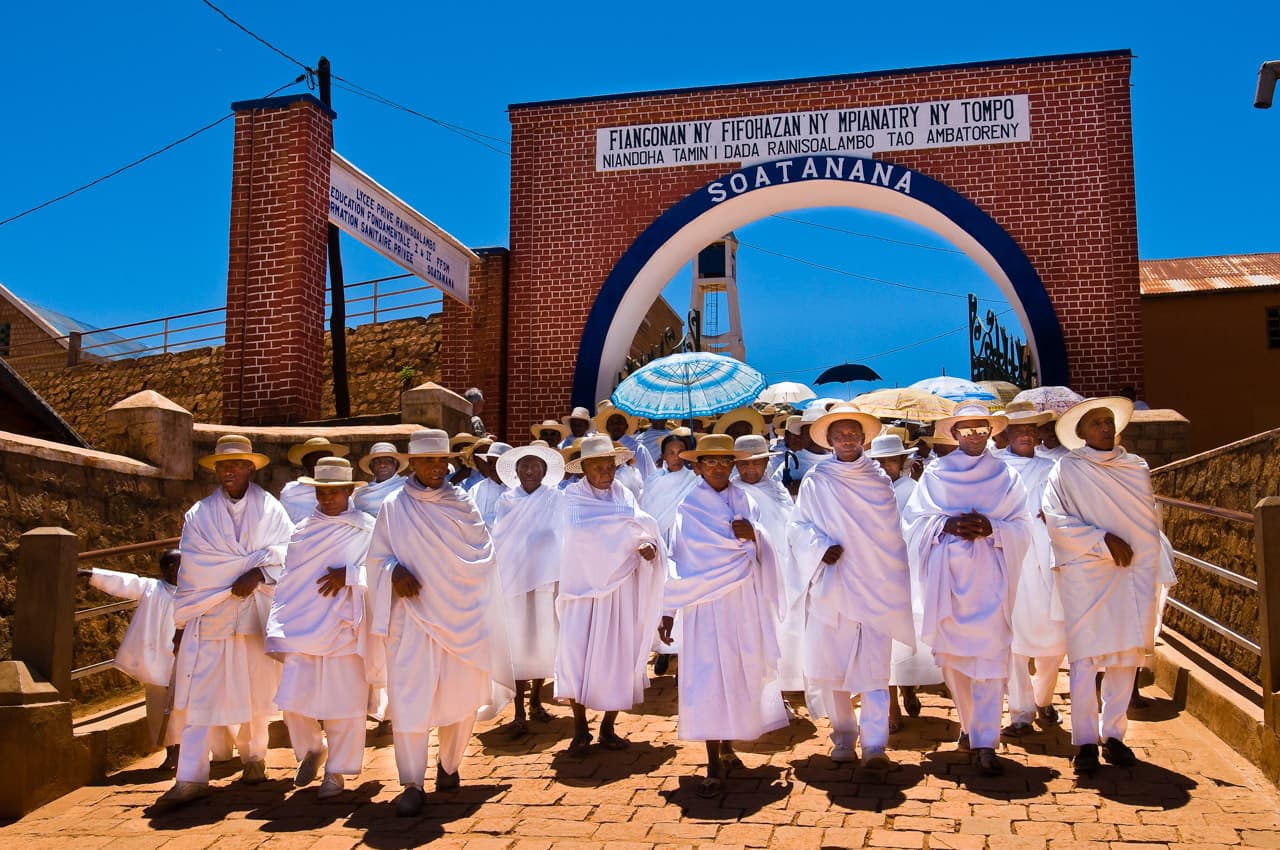
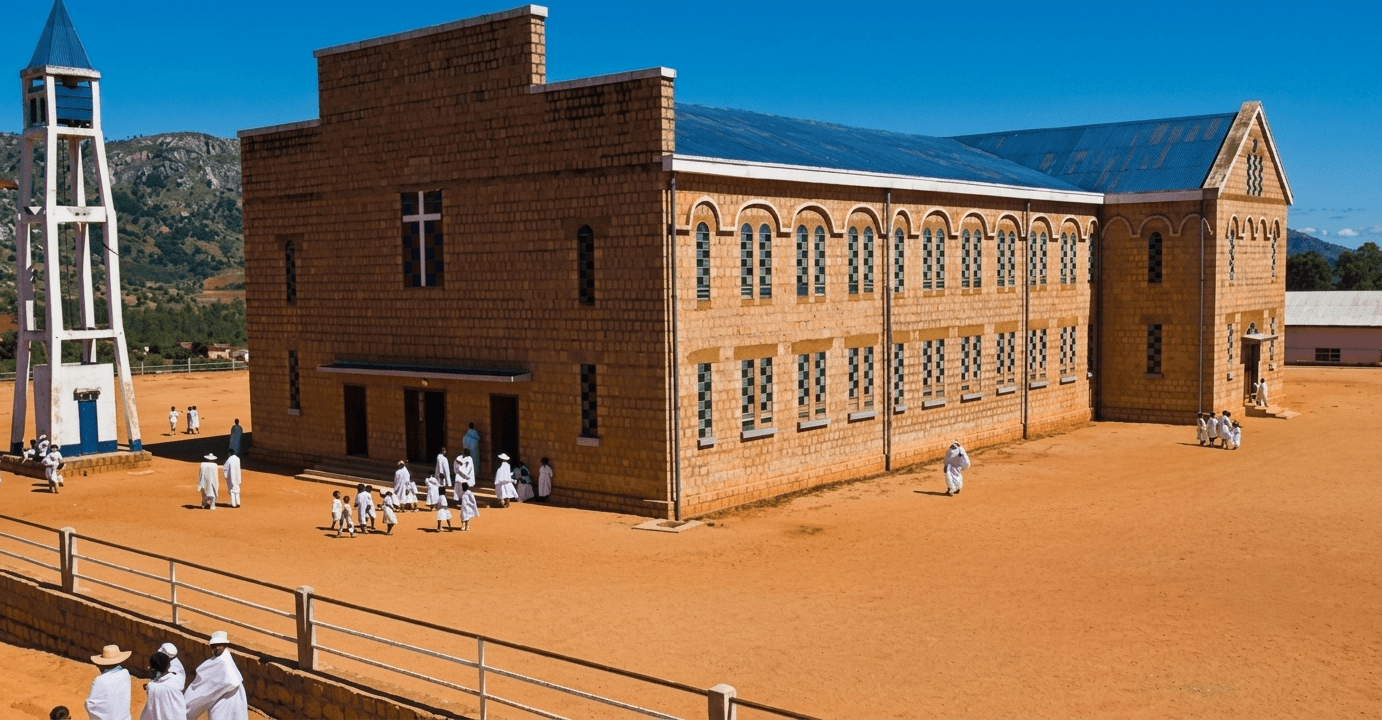
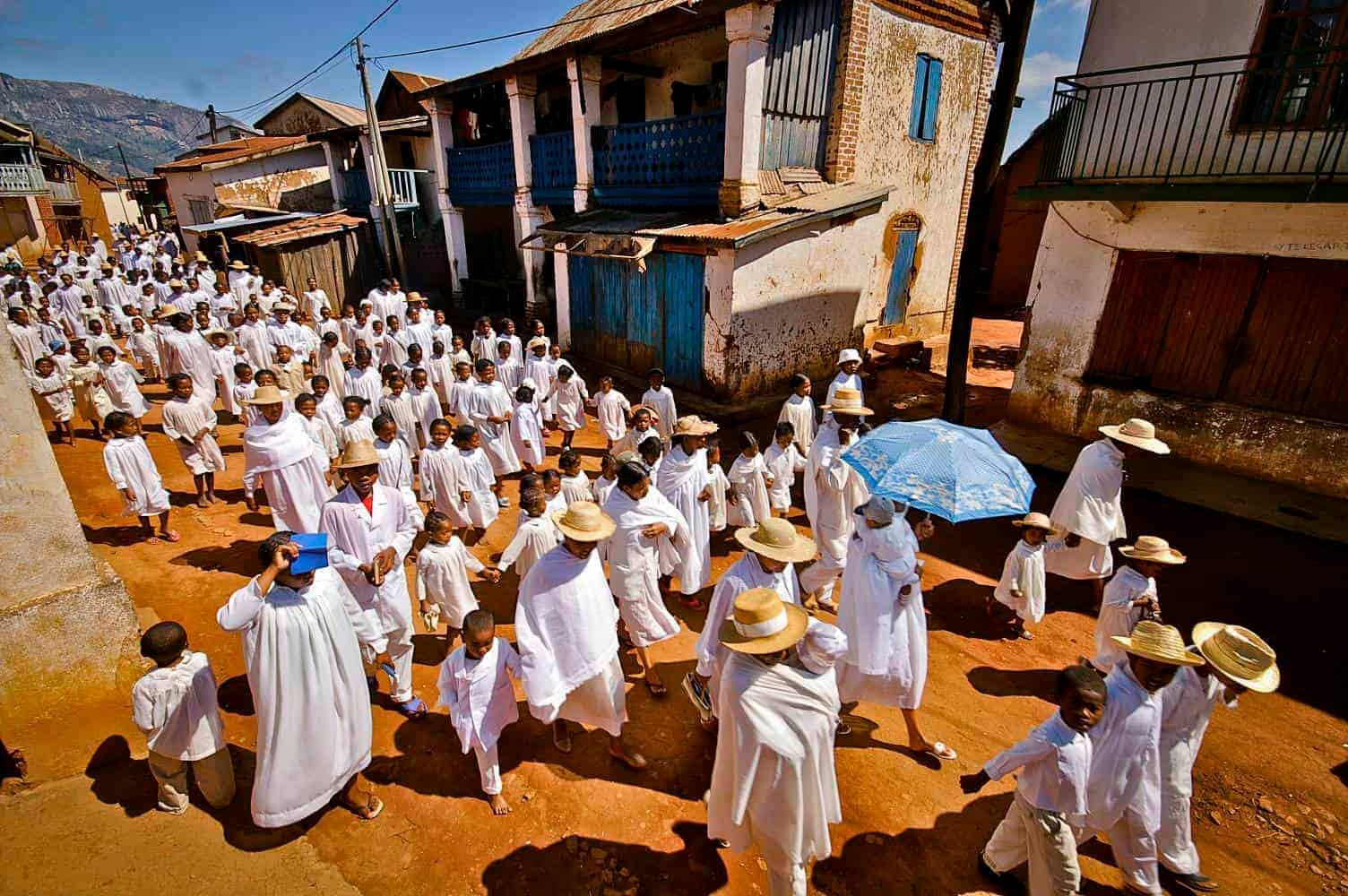
The toby lehibe of Soatanàna
The community's historic spiritual centre, in the Haute Matsiatra region.